Small Loans Australia Boat Loan Repayment Calculator
Plan your dream boat purchase with our Boat Loan Calculator. Enjoy low rates, flexible terms, and quick estimates to find the best finance for your lifestyle.
Calculator results are estimates only and not quotes. Actual quotes will be provided by licensed brokers after you submit an enquiry.
Boat Loan Details:
Important!
Boat Loan Interest Rates differ from lender to lender and will depend on your individual circumstances (credit history, employment status, age, etc.). To find out if you qualify ... and for a free, personalised interest rate and repayment quote,
please CLICK HERE
Boat Loan Amortisation Calculator
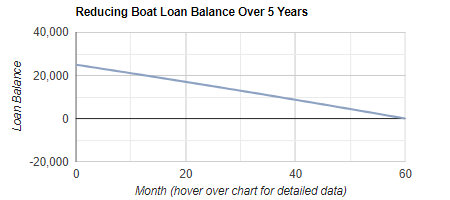
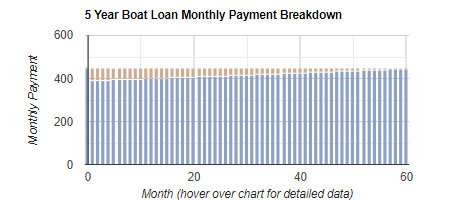
The following amortisation graphs detail month-by-month data on the progress of the proposed loan. The first chart below examines the reducing loan balance over the course of the finance contract term. The second graph illustrates the portion of each monthly repayment allocated to payment of interest vs principal reduction.
How to use our Boat Loan Repayment Calculator
Our Boat Loan Repayment Calculator helps you estimate repayments for boat finance before you apply, so you can plan a budget that suits your lifestyle and compare different loan terms, interest rates and deposit options. It is important because small changes to the interest rate or loan term can materially change your monthly repayment and the total interest paid over the life of the loan.
How to complete the calculator for the best estimate
1. Purchase Price
Enter the total purchase price of the boat in Australian dollars as a whole number only, with no commas or decimal points. For a more realistic result, consider whether you want to include other costs you may finance, such as stamp duty, registration, insurance and accessories, where applicable.
2. Deposit or Trade-in Value
If you have cash savings or a trade-in, enter that amount as a whole number. A larger deposit generally reduces the amount you need to borrow, which can reduce repayments and total interest.
3. Term of Loan (Years)
Select the number of years you want to repay the loan over. A longer term usually lowers repayments, but often increases the total interest cost across the loan.
4. Interest Rate (Per Annum)
Choose an indicative annual interest rate for the simulation. Use a conservative rate if you are unsure, and consider testing multiple rates to understand best and worst case affordability. Your actual rate may differ based on lender policy and your personal circumstances.
5. Calculate
Select calculate to generate your estimate.
How to interpret the results
Review the estimated repayment amount and the amortisation information. The reducing balance chart shows how the loan balance may fall over time. The interest versus principal chart shows how early repayments typically include a higher interest portion, with more principal repayment later in the term.
ASIC and lending disclaimer: This calculator provides general information only and does not consider your objectives, financial situation or needs. Results are estimates and may not include lender fees, ongoing charges or changes in rates. Credit is subject to approval and you should check the final loan contract terms and your ability to meet repayments before proceeding.
Credit scores play a crucial role in your financial life, influencing your ability to access loans, credit cards, and even housing rentals. In Australia, your credit score is a numerical representation of your creditworthiness, which lenders use to assess the risk of lending to you. - read more
Debt can often feel like a formidable obstacle on the path to financial stability. Many individuals battle with various forms of debt, from high-interest credit cards to significant loans that seem to have an unyielding grip on their financial lives. Recognizing the challenges that debt presents is the critical first step towards regaining control of your personal finances. - read more
Small loans under $10,000 can help Australian borrowers cover personal expenses or business needs, but their costs, terms and eligibility criteria vary. This guide explains how they usually work, what lenders may consider and what to compare before borrowing. - read more
Bad credit can make a personal loan application more difficult, but it does not always mean every option is closed. Understanding your credit position, repayment capacity, loan types and lender requirements can help you compare personal loan options more carefully and avoid taking on debt that may be difficult to manage. - read more
Budgeting is not about removing every enjoyable expense from your life. At its best, a budget gives you a clear view of your income, spending, savings and debt so you can make calmer, more informed financial decisions. A practical financial plan can help you prioritise essentials, prepare for unexpected costs and make steady progress towards short-term and long-term goals. - read more
When it comes to borrowing money, whether it's for personal use or for your small business, understanding interest rates is paramount. An interest rate, simply put, is the cost you pay to borrow money. It's typically expressed as a percentage of the principal amount you're loaned. This fee is how lenders earn on the funds they lend and is a key component you should consider before signing a loan agreement. - read more
Interest rates play a vital role when it comes to borrowing money. They determine how much extra you'll pay on top of the amount you've borrowed. - read more
Small loan eligibility in Australia is usually assessed on income, expenses, employment, credit history, existing debts and affordability. This guide explains the common factors lenders may consider before offering a loan under $10,000. - read more
Welcome to our blog! For young families, securing your future often requires careful planning and prudent financial decisions. One of the most crucial steps you can take in this journey is creating a financial safety net. - read more
A fresh round of financial complaints reporting has put credit products back under the spotlight, with borrowers continuing to raise concerns about repayment pressure, fees, credit reporting, hardship support and the way lenders communicate when things go wrong. For Australians considering small loans, the message is practical rather than alarming: quick access to finance can be useful, but it should come with clear terms, realistic repayments and a plan if your income changes. - read more
Recent consumer finance reporting has again highlighted a problem many Australians already feel in their weekly budget: savings buffers are thin, and unexpected costs are arriving faster than wages can absorb them. Car repairs, medical bills, rent gaps, utility catch-ups and small business cash flow shortages can all turn into urgent funding decisions, especially for casual workers, sole traders and households with irregular income. - read more
Recent finance market reporting points to a sharper divide in Australia’s personal loan market: borrowers with stronger credit profiles and stable incomes may still find competitive offers, while applicants with patchier credit, casual income or heavier existing commitments can face higher pricing, tighter limits or more conditions. For Australians considering small loans, that gap matters more than the headline rate. - read more
Buy now pay later has shifted from a simple checkout convenience to a more formal part of Australia’s consumer credit landscape. Since the newer regulatory framework began applying, providers have faced clearer expectations around licensing, suitability checks, complaints handling and support for customers who fall behind. For everyday borrowers, this matters because BNPL, small personal loans and other short-term finance products often compete for the same household budget. - read more
Australia’s latest interest rate pause gives borrowers a little breathing space, but it should not be mistaken for a drop in loan costs. After months of pressure from inflation, rents, insurance, groceries and utilities, the Reserve Bank’s decision to keep the cash rate steady leaves many households and small business owners still managing repayments shaped by earlier increases. - read more
Australians searching for quick finance are being urged to slow down before responding to online loan offers, as scam activity continues to target people under cost-of-living pressure. The warning is especially relevant for borrowers who need urgent money for bills, car repairs, medical costs, rent gaps or short-term business cash flow. - read more
Australia’s credit regulator has kept the spotlight on how lenders respond when borrowers fall into financial hardship, a theme that matters directly to households and small business operators using small loans to manage short-term pressure. The message is simple: hardship support should be accessible, practical and clearly explained, not buried behind confusing processes or repeated requests for the same information. - read more
Australia’s corporate regulator has renewed attention on private credit, warning that a fast-growing part of the lending market is now facing a tougher test. Private credit generally refers to loans arranged outside the traditional banking system, often through funds, investment managers or specialist lenders. While this may sound distant from everyday small loans, the health of non-bank credit can still influence how finance is priced, assessed and made available. - read more
ASIC’s latest review of the motor vehicle finance sector is a timely reminder that the true cost of borrowing can sit well beyond the advertised interest rate. While the review focused on car loans, the lessons apply to many Australians considering small personal loans, short term finance or any borrowing arranged through a third party. - read more